


Having Iron in Water?
Iron Removal Filters are specially designed water treatment units that eliminate excess iron, manganese, and suspended impurities from water. They improve the clarity, taste, and odor of water while protecting pipelines, appliances, and fixtures from rust stains and blockages.
WHO recommends dissolved iron should be <0.3 ppm for drinking water
Our Solution

-
Durable Multiport Valves: Our iron removal filters are equipped with high-quality multiport valves designed for smooth operation, long life, and easy maintenance. These valves ensure efficient backwash and rinse cycles, enhancing system performance.
-
Premium Pressure Vessels: We use corrosion-resistant FRP and MS vessels with superior wall thickness to handle high pressure and ensure long-lasting durability in all weather conditions.
-
Branded Pipelines: Every system is fitted with branded PVC/UPVC pipelines to ensure leak-proof connections, higher flow rate, and long-term reliability in both domestic and industrial use.
-
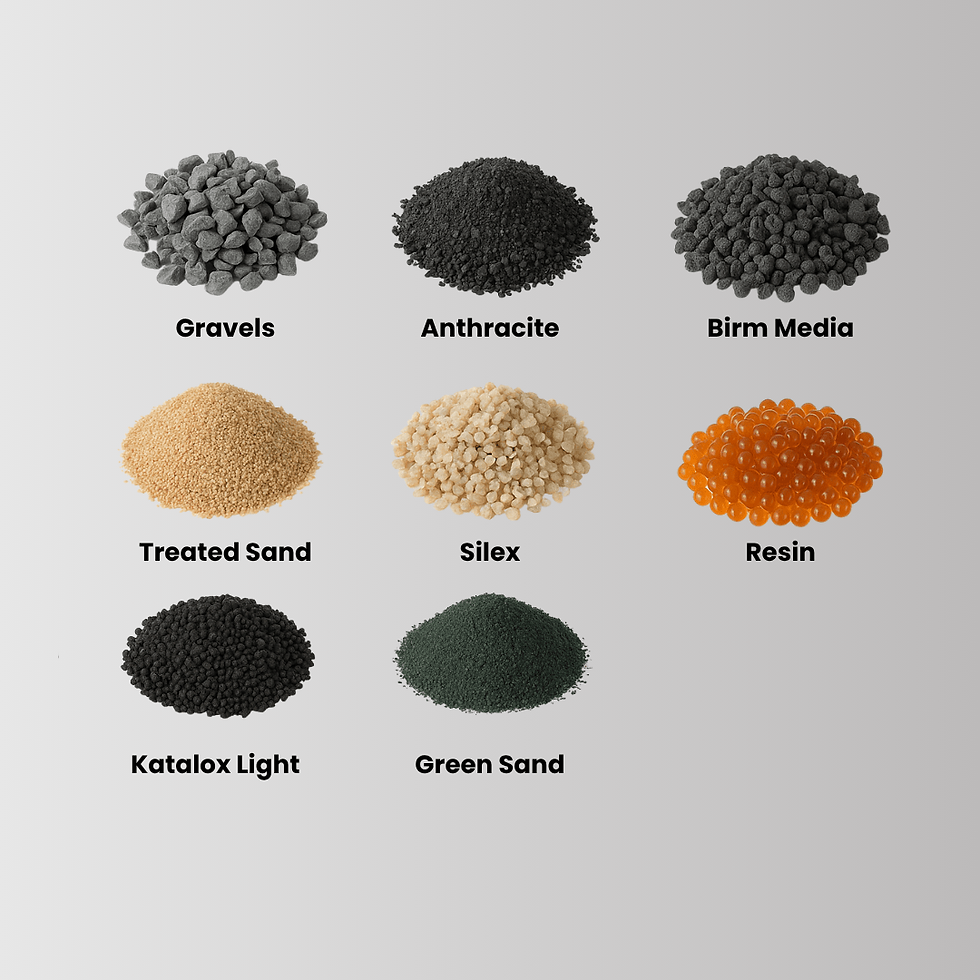
Gravels: The bottom layer provides structural support and helps in uniform water distribution during filtration and backwash.
-
Anthracite: This lightweight, high-carbon media efficiently removes suspended solids and improves iron removal capacity.
-
Silex: A naturally hard quartz media that effectively traps fine particles and ensures clear, filtered water.
-
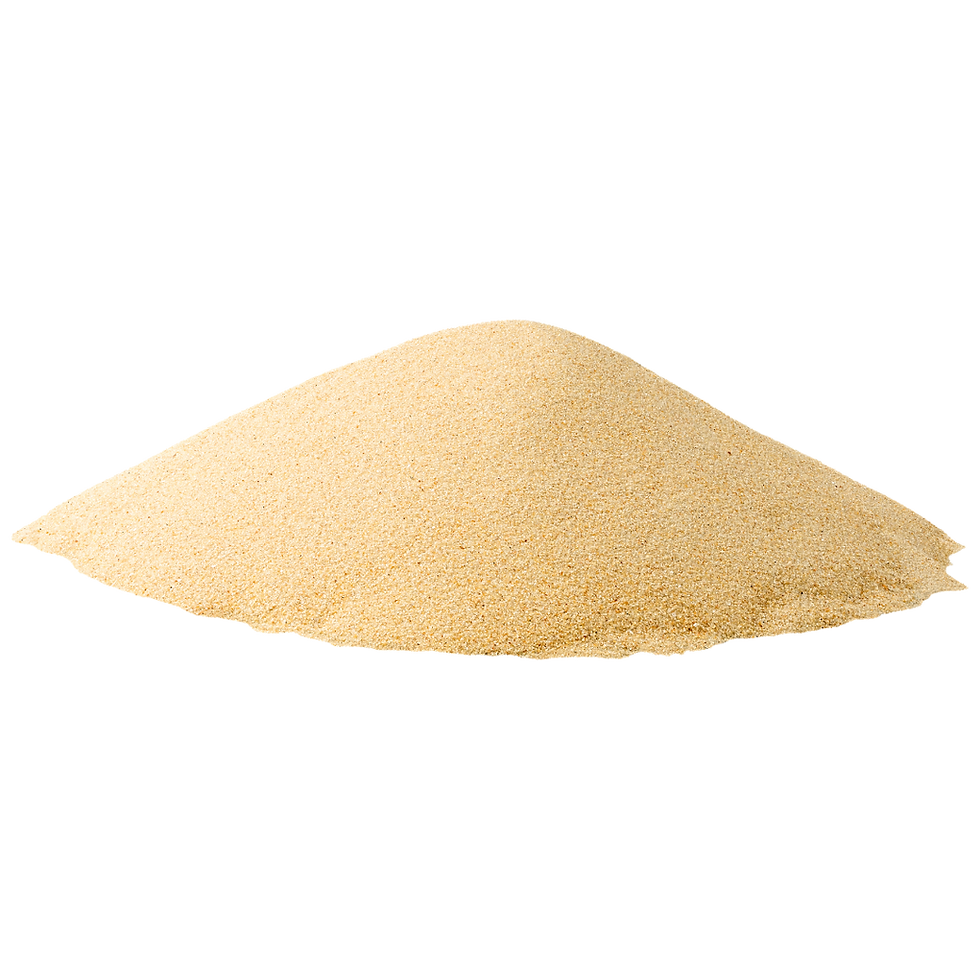
Treated Sand: Specially processed sand that enhances iron and turbidity removal performance, ensuring crystal-clear water output.
-
Green Sand: Manganese-coated green sand aids in oxidizing dissolved iron and manganese, giving final polishing to the treated water.
*You may not need all these types of Filtration Media, the actual requirement and design will depend upon your water quality.
Features | Other Companies | Our Company |
|---|---|---|
Types of Filter Media | Limited | All types of available media |
Warranty | 1 year | 1 year |
Budget | Fixed | Flexible |
Media Layers | Average | Expert technicians for the most efficient media layering |
Customization | Limited | As per our client's requirement |
Support | Working days and hours only | On call support through 4 lines |
Brand Options | Limited | All leading manufacturing brands |
STARTING FROM ₹20,000
Customization Options
Filter Media
• Gravels • River Sand •Treated Sand • Green Sand • Birm Media • Katalox • MnO2 • Silex • Anthracite • Quartz

Capacity
Designed in all capacities. We offer standard FRP vessels for regular flow rates and fabricate MS vessels for high-capacity plants, ensuring scalability from domestic to heavy industrial applications.

MOC
FRP
Mild Steel
Stainless Steel
Key Features
-
Removes dissolved iron and manganese effectively
-
Prevents reddish-brown stains on clothes, tiles, and plumbing
-
Durable and corrosion-resistant filter vessel
-
Simple design with efficient filtration media
-
Available in various sizes for domestic, commercial, and industrial use
-
Clear, odor-free, and better-tasting water
-
Longer life of household appliances, geysers, and washing machines
-
Protects plumbing lines from clogging and scaling
-
Reduces maintenance costs on fixtures and equipment
-
Ensures a healthier and safer water supply
Benefits
Applications
Groundwater often contains high levels of dissolved iron and manganese. Borewells especially, due to deep aquifers, may have 1–10 ppm iron, far above the safe limit of 0.3 ppm. Using an iron removal filter ensures the water is clear, odor-free, and suitable for domestic or industrial use, preventing stains and protecting pipelines.
In homes, high iron content leads to yellowish water, reddish stains on bathroom tiles, and damaged appliances like washing machines and geysers. Installing an iron removal filter in residential buildings ensures safe, clean water for drinking, cooking, and bathing, while reducing maintenance costs and improving the lifespan of household fittings.
Places with large water consumption cannot afford poor water quality. Iron-contaminated water in these establishments causes stains on laundry, foul taste in drinking water, and customer dissatisfaction. In hospitals, iron-free water is critical to maintain hygiene and prevent bacterial growth. In hotels and schools, it helps maintain clean bathrooms, laundry, and kitchens, ensuring a positive reputation and compliance with safety standards.
Industries such as food processing, textiles, paper, and power plants require water free from iron, manganese, and turbidity. High iron can clog pipelines, foul RO membranes, and damage boilers. By installing iron removal filters, industries can achieve smooth operations, lower equipment downtime, and reduced maintenance costs, while also meeting water quality standards for production.
Working Principle
When water from a borewell or well contains excess iron, it often looks yellowish, leaves reddish-brown stains on tiles, basins, and clothes, and even gives a metallic taste. An Iron Removal Filter is designed to solve this problem in a natural and hassle-free way.
-
Step 1 – Oxidation of Iron
-
As raw water enters the filter through the multiport valve, oxygen present inside the vessel reacts with the dissolved iron.
-
This changes soluble ferrous iron (invisible in water) into ferric iron, which appears as tiny rust-like particles.
-
-
Step 2 – Filtration Through Special Media
-
The water then passes through a special filtering media bed (Manganese Dioxide, Greensand, or Birm).
-
These layers trap the rust particles, manganese, and suspended impurities while letting clean water pass through.
-
This ensures that stains, metallic taste, and foul odor are removed.
-
-
Step 3 – Supporting Gravel Layer
-
At the bottom, there is a strong gravel bed that supports the filter media.
-
It helps distribute water evenly and prevents any fine particles from escaping into the outlet.
-
-
Step 4 – Clear Water Outlet
-
The treated water coming out of the filter is clear, fresh, and free from excess iron and manganese.
-
It protects your pipelines, taps, washing machines, and RO systems from rust and blockages.
-
-
Step 5 – Easy Self-Cleaning (Backwash)
-
Over time, the filter media collects iron and dirt.
-
By simply turning the multiport valve to the backwash mode, water flows in the reverse direction.
-
This process shakes, cleans, and refreshes the media, flushing out all the trapped impurities.
-
After backwash, the filter is ready to work like new again.
-

Add-on:
Oxidation Chamber

The Oxidation Chamber is an optional pre-treatment unit designed to enhance iron removal efficiency. In this chamber, Manganese Dioxide (MnO₂) is used as an oxidizing agent to convert dissolved ferrous iron (Fe²⁺) into ferric iron (Fe³⁺), which can be easily filtered out in the next stage. This process ensures faster oxidation, improves water clarity, and extends the life of the iron removal media.


How to Operate
-
Start Water Flow – Open the inlet valve to allow raw water into the filter.
-
Filtration Mode – Keep the filter in “Filter” position for daily water purification.
-
Backwash (Cleaning) – Every few days, turn the valve to “Backwash” mode. This reverses water flow and flushes out trapped iron particles.
-
Rinse – After backwashing, switch the valve to “Rinse” mode for 2–3 minutes to settle the filter media.
-
Return to Filter Mode – Move the valve back to “Filter” mode for regular use.
-
Repeat Cycle – Perform backwash and rinse regularly based on water quality and usage.
Maintenance Guide
-
Backwash the filter regularly to flush out accumulated iron particles
-
Check pressure levels to ensure proper water flow
-
Replace or recharge filter media periodically (every 1–2 years depending on water quality)
-
Inspect valves and filter vessel for leakage or blockages

Pro Tips for Long-Term Performance
-
Install a pre-sediment filter to avoid clogging from mud and sand
-
Test raw water quality before choosing filter capacity
-
Use alongside a softener or RO system if water has multiple contaminants
-
Schedule annual professional servicing for best results

Tired of rust stains and metallic taste in water? Contact us today for professional installation of Iron Removal Filters customized to your water needs.

Comprehensive Solutions for any type of Water

Water containing excess dissolved iron, causing rust stains and metallic taste.


